a team of materials scientists at the university of maryland have developed a new method of producing transparent wood. used primarily for housing, paper, and fuel, timber is one step closer to replacing glass and plastic windows. the advancement marks a potential new avenue for environmentally sustainable construction as transparent timber exceeds glass in its production efficiency and thermal insulation. one of the main obstacles in fabricating transparent wood is the ‘delignification’ process which removes wood tissue to reduce light absorption. early ‘solution-based’ methods of delignification generally consume large amounts of harmful chemicals and energy, and often weaken the wood structure. the team at the university of maryland has introduced an optimized strategy which modifies the lignin, rather than removing it, with a ‘solar-assisted chemical brushing’ approach.
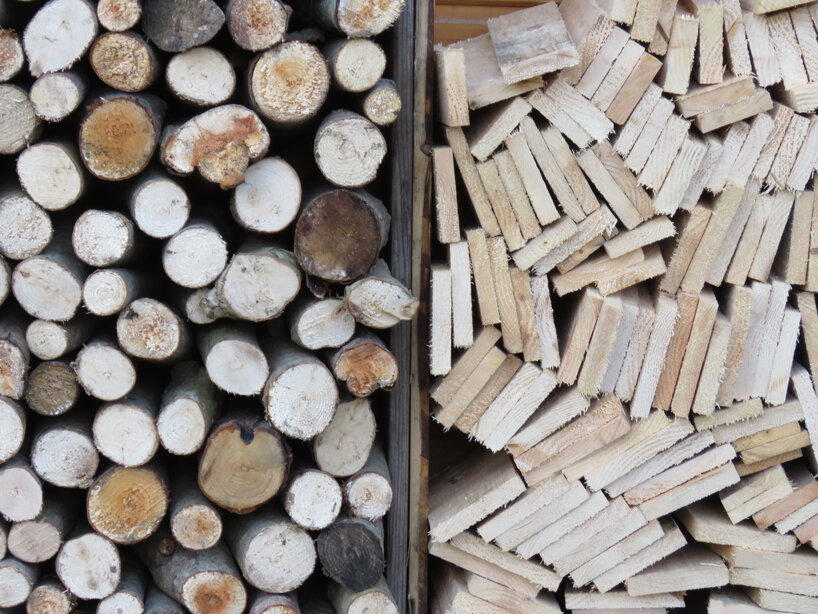
image by chris | banner image by insung yoon
the research team at university of maryland demonstrates how to make transparent wood with minimal use of energy and chemicals. the process involves the application of simple hydrogen peroxide, commonly used to bleach hair, followed by exposure to UV light. this serves to modify the chromophores, responsible for the color of the wood, so they no longer act to absorb light. after this process the wood has changed from brown to completely white. the white color results from the pores or holes in its structure which scatter light. at last, an epoxy resin is applied which fills these pores and reduces light scattering — resulting in an optical transparency. by modifying the lignin rather than removing it, the wood maintains a high tensile strength.
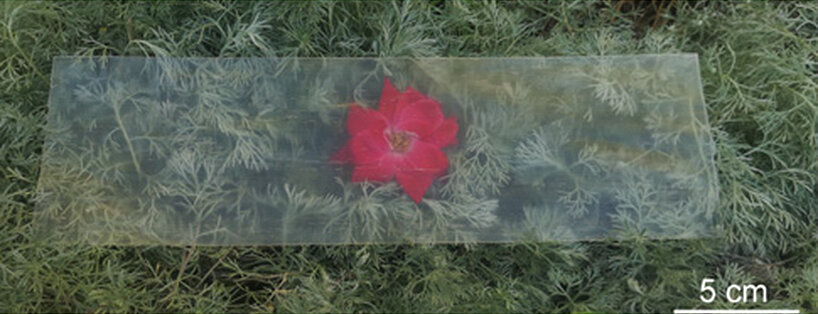
image courtesy of department of materials science and engineering, university of maryland
the simplicity and efficiency of this method introduces exciting new potential for the architectural application of transparent wood. earlier methods involved fully immersing the material into a chemical solution, making it difficult to modify selective areas. with this new strategy, the chemical is brushed onto the wood, creating new opportunities for patterning or decorative effects. in the global effort toward environmentally sustainable buildings, timber windows introduce an unexpected opportunity. rapid, cost-effective, and clean, the new material may stand as an exciting candidate for energy-efficient architecture.
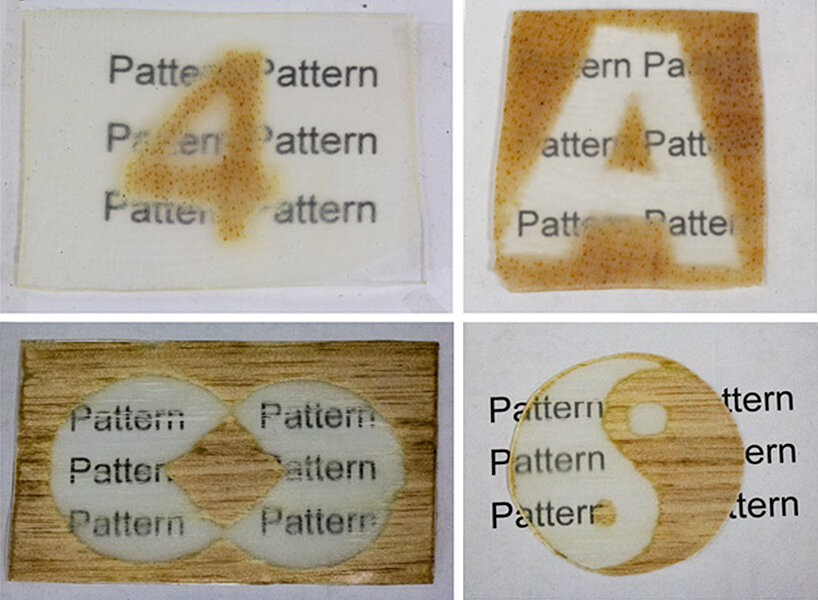
image courtesy of department of materials science and engineering, university of maryland


project info:
project title: solar-assisted fabrication of large-scale, patternable transparent wood
team members: qinqin xia, chaoji chen, tian li, shuaiming he, jinlong gao, xizheng wang, liangbing hu
location: department of materials science and engineering, university of maryland
date of publication: january 27th, 2021
"wood" - Google News
February 17, 2021 at 12:32AM
https://ift.tt/3rZhjCL
researchers develop transparent wood as an efficient alternative to glass - Designboom
"wood" - Google News
https://ift.tt/3du6D7I



No comments:
Post a Comment