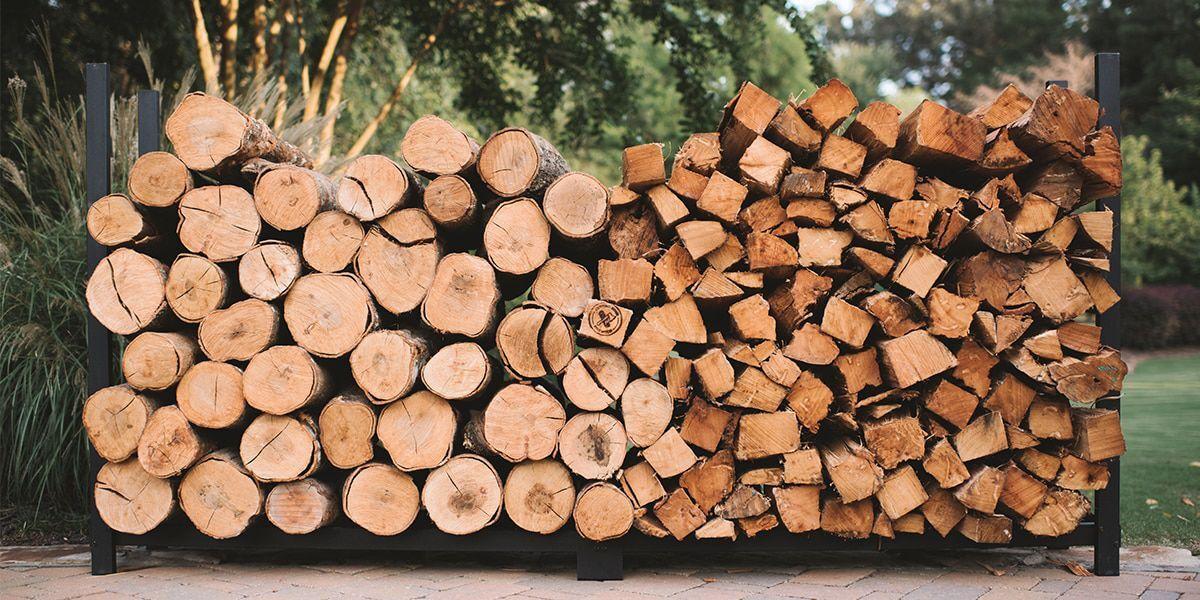
Even though the number of fireplaces using actual wood have been declining, the number of outdoors fireplaces have been increasing. There is nothing more soothing than sitting around the fireplace and eating smores. So, the question becomes, what should homeowners look for when purchasing firewood?
Good firewood is dry, burns through the second stage or charcoal stage without sparks and with a minimum of smoke production and spends a long time burning in the ember glow stage. Wow, what a description.
Different types of wood burn differently. The heating value of wood depends on the density of that wood. In general the heavier or denser woods contain higher heating values, in BTU’s per unit volume than lighter wood. For example, one cubic foot of black locust will produce almost as much heat as two cubic feet of cottonwood. Light woods, such as cottonwood and willow, produce roughly the same heat value per pound as heavier woods, such as oak, but are less dense and therefore produce less heat per unit volume.
Many Oklahomans cut firewood in the fall for that winter’s use, which actually is very inefficient. According to the state Extension forester, ideally fuel wood should be cut from six to nine months ahead of time to allow proper air drying. Wood cut only a few months before burning does not have enough time to dry and contains too much moisture.
Enough time is needed to allow proper air-drying of the wood down to 20% moisture content. Those seasoning cracks, which develop on the end of logs one to two weeks after cutting, indicate surface drying alone and not drying throughout the log.
Cutting fuel wood from May to August is not the most enjoyable time to be out in the woods working, however there is a good shortcut to having seasoned wood this winter. By dropping selected trees in July and not cutting the logs up, or even removing the branches with leaves, allows a great deal of drying to occur. Leaving the foliage attached to the felled logs will result in water being drawn rapidly out of the wood through transpiration. August and September are typically dry months, resulting in additional seasoning.
During the traditional fall firewood cutting, logs should be cut to stove length and split. Except for blackjack oak and bois d’ ark which gets very hard when dry, this phase of the fuel wood operation will be easier. These two species should be cut up completely when green, because they are very hard to saw when dry.
Various woods have different splitting characteristics that are very important to consider, especially if you have to split your wood. Some woods split with little effort whiles others can be tough and stringy. Short lengths of straight-grained cottonwood or pine will split with little effort. In contrast, woods with interlocking grain, like American elm and sycamore, can be extremely stringy and are difficult to split even with a hydraulic wood splitter.
Some advantages of burning seasoned wood over green wood are:
-Green wood must be dried before it will burn. When the drying takes place in the woodstove, a great deal of heat energy is used to drive off the moisture.
-Burning dry wood is more efficient, so less is needed. The harvesting, hauling and preparation takes 4 to 10 hours per standard cord.
-Less creosote will build-up because moisture content from burning green wood goes up the chimney as steam, and condenses on the upper flue area. Also green wood smokes and smolders more both leading to a greater amount of creosote build-up in the chimney. This results in a fire hazard and more work to clean the chimney.
—Jim Coe lives in Lawton.
"wood" - Google News
August 06, 2020 at 01:00PM
https://ift.tt/30wjcf8
What should you look for when purchasing wood? - The Lawton Constitution
"wood" - Google News
https://ift.tt/3du6D7I




No comments:
Post a Comment